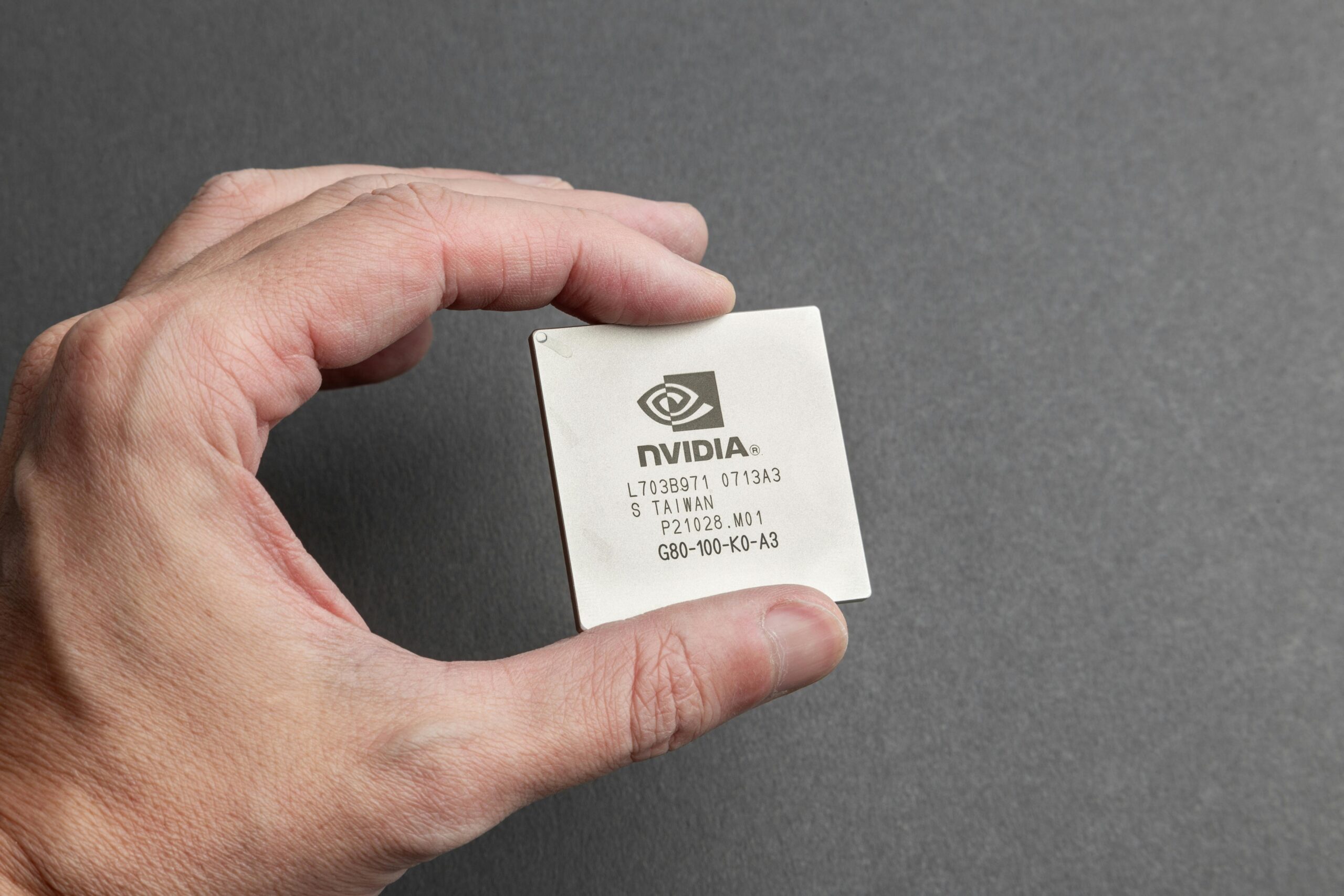
The convergence of human intelligence and artificial intelligence represents one of the most transformative developments of our era, reshaping how we innovate, collaborate, and envision our collective future.

As we stand at this technological crossroads, the question is no longer whether AI will impact our lives, but rather how we can deliberately design symbiotic relationships that amplify human potential while leveraging machine capabilities. This partnership between biological and artificial intelligence offers unprecedented opportunities to solve complex challenges, accelerate innovation cycles, and unlock creative possibilities previously confined to the realm of science fiction.
🤝 Understanding Symbiotic Human-AI Relationships
A symbiotic human-AI system goes beyond simple tool usage or automation. It represents a collaborative framework where human creativity, emotional intelligence, and ethical reasoning combine seamlessly with AI’s computational power, pattern recognition, and data processing capabilities. Unlike traditional technology implementations that replace human functions, symbiotic systems enhance and augment human abilities while maintaining human agency at the center of decision-making processes.
This relationship flourishes when both parties contribute their unique strengths. Humans bring contextual understanding, moral judgment, creative intuition, and the ability to navigate ambiguity. AI contributes tireless processing capacity, rapid data analysis, consistent performance, and the ability to identify patterns across vast datasets that would overwhelm human cognition. Together, they create outcomes neither could achieve independently.
The Evolution from Automation to Augmentation
Early technological adoption focused primarily on automation—replacing human labor with machines to increase efficiency and reduce costs. While this approach delivered economic benefits, it also created anxiety about job displacement and the devaluation of human contribution. The symbiotic approach represents a paradigm shift, positioning technology as an intelligence amplifier rather than a replacement.
This evolution recognizes that the most valuable outcomes emerge when human judgment guides AI capabilities toward meaningful objectives. Rather than asking “What can AI do instead of humans?” the symbiotic perspective asks “How can AI help humans achieve what was previously impossible?”
💡 Innovation Acceleration Through Collaborative Intelligence
The innovation landscape has transformed dramatically with symbiotic AI systems. Research and development cycles that once required years can now compress into months or weeks. Scientists use AI to analyze millions of molecular combinations, artists employ generative systems to explore aesthetic territories, and engineers leverage simulation environments that test thousands of design variations simultaneously.
Consider pharmaceutical development, where AI systems analyze biological pathways and predict drug interactions at unprecedented scales. Human researchers provide the crucial elements: understanding disease mechanisms in patient contexts, ethical considerations for clinical trials, and creative hypotheses about treatment approaches. This collaboration has already accelerated vaccine development and identified promising treatments for previously intractable conditions.
Creative Industries Reimagined
Contrary to fears that AI would replace human creativity, symbiotic systems are expanding creative possibilities. Musicians collaborate with AI to explore harmonic structures and generate accompanying arrangements, while maintaining artistic direction and emotional authenticity. Writers use language models to overcome creative blocks, generate alternative phrasings, and explore narrative branches, all while retaining their unique voice and storytelling vision.
Design professionals leverage AI to rapidly prototype concepts, test color palettes, and visualize spatial arrangements, freeing cognitive resources for higher-level strategic thinking about user experience and brand identity. These partnerships don’t diminish human creativity; they provide scaffolding that allows creative professionals to operate at higher levels of abstraction and impact.
🌐 Transforming Collaboration Across Boundaries
Symbiotic AI systems are revolutionizing how teams collaborate across geographical, linguistic, and disciplinary boundaries. Real-time translation powered by AI enables seamless communication between team members speaking different languages, while maintaining nuance and context that earlier translation tools missed. Knowledge management systems synthesize information across projects, surfacing relevant insights and preventing duplicated efforts.
Virtual collaboration platforms enhanced with AI capabilities can analyze meeting dynamics, identify when important voices aren’t being heard, suggest optimal meeting times across time zones, and automatically generate action items with appropriate assignments. These systems handle coordination complexity, allowing human participants to focus on substantive discussions and relationship building.
Breaking Down Silos Through Intelligent Integration
Organizations have long struggled with information silos that prevent effective cross-functional collaboration. AI systems can bridge these gaps by integrating data from disparate sources, translating technical jargon between departments, and identifying connections between projects that human participants might miss due to limited visibility into other areas.
A marketing team might discover that customer feedback patterns align with engineering quality metrics they weren’t aware of, or research teams might find that different departments are tackling related problems with complementary approaches. AI serves as the connective tissue, while humans provide the insight to act on these connections meaningfully.
🚀 Unlocking Limitless Possibilities in Problem-Solving
Complex global challenges—climate change, healthcare access, educational inequality, sustainable resource management—require solutions at scales and speeds beyond purely human capacity. Symbiotic AI systems enable approaches that weren’t previously feasible, processing enormous datasets while incorporating human values, priorities, and contextual knowledge.
Climate modeling benefits from AI’s ability to simulate countless scenarios incorporating variables from atmospheric science, oceanography, economic systems, and human behavior patterns. Human experts provide critical interpretation, identifying which scenarios deserve deeper investigation, questioning model assumptions, and translating findings into actionable policy recommendations.
Personalization at Scale
Education represents another domain where symbiotic systems unlock new possibilities. Adaptive learning platforms powered by AI can personalize educational content, pacing, and assessment methods for individual students at scales impossible for human teachers alone. Meanwhile, teachers focus on mentorship, emotional support, motivation, and the irreplaceable human connections that inspire lifelong learning.
Healthcare similarly benefits from AI systems that analyze patient data, medical literature, and treatment outcomes to support diagnostic accuracy and treatment planning. Physicians provide the crucial human elements: understanding patient preferences and life circumstances, communicating with empathy, and making judgment calls when guidelines don’t perfectly fit individual cases.
⚖️ Ethical Foundations for Symbiotic Systems
As we embrace these powerful capabilities, establishing ethical frameworks becomes paramount. Symbiotic AI systems must be designed with transparency, accountability, and human oversight built into their architecture. This means creating explainable AI systems where humans can understand why particular recommendations or decisions were made, enabling informed acceptance or rejection of AI suggestions.
Privacy protection requires careful attention as AI systems access increasing amounts of personal and organizational data. Symbiotic approaches should implement privacy-by-design principles, collecting only necessary information and providing individuals with meaningful control over their data. The human element ensures that efficiency gains don’t override fundamental rights and dignity.
Bias Mitigation and Fairness
AI systems learn from historical data that often contains societal biases. Symbiotic approaches acknowledge this limitation explicitly, incorporating human oversight to identify and correct biased patterns. This requires diverse teams reviewing AI outputs, questioning assumptions, and ensuring that systems serve all populations equitably rather than perpetuating historical inequalities.
Continuous monitoring and adjustment become essential practices. As contexts change and new edge cases emerge, human judgment identifies when AI systems need retraining or modification. This ongoing partnership ensures that technological systems evolve alongside our understanding of fairness and justice.
🎯 Practical Implementation Strategies
Organizations seeking to harness symbiotic human-AI systems should begin with clear objectives aligned to human needs rather than technology-first approaches. Identify pain points where human capacity is genuinely limited by information overload, processing speed, or scale rather than areas where human judgment is the core value proposition.
Start with pilot projects in contained environments where outcomes can be carefully monitored and learned from. Build feedback loops that capture both quantitative metrics and qualitative human experiences. Are workers feeling empowered or overwhelmed? Are customers receiving better outcomes? Are decisions improving in quality and speed?
Building AI Literacy Across Organizations
Successful symbiotic systems require workforce development that goes beyond technical AI expertise. All team members benefit from understanding AI capabilities and limitations, enabling them to effectively collaborate with these systems. This doesn’t mean everyone needs programming skills, but rather conceptual understanding of how AI systems learn, what they excel at, and where human judgment remains essential.
Training should emphasize critical thinking about AI outputs rather than uncritical acceptance. Workers should feel empowered to question recommendations, identify errors, and provide feedback that improves system performance. This creates a true partnership rather than a hierarchy where humans simply execute AI instructions.
🔮 The Road Ahead: Emerging Frontiers
Looking forward, several exciting frontiers promise to deepen human-AI symbiosis. Brain-computer interfaces may eventually enable more direct communication between human cognition and AI systems, though such technologies raise profound ethical questions requiring careful societal deliberation. Quantum computing could expand AI capabilities exponentially, enabling simulations and optimizations currently beyond reach.
Emotional AI systems are becoming more sophisticated at recognizing and responding to human emotional states, potentially enabling more empathetic interactions. However, this capability also requires careful ethical boundaries—we must distinguish between systems that appropriately respond to emotional context and those that manipulate emotions for commercial purposes.
Distributed Intelligence Networks
Future symbiotic systems may involve networks where multiple AI agents collaborate with multiple humans in fluid, dynamic configurations. Imagine emergency response scenarios where AI systems coordinate resources and information flow while human responders make split-second decisions based on ground truth and human factors. Or research collaborations where international teams work seamlessly with AI systems that manage information synthesis across languages, disciplines, and data sources.
These distributed networks could tackle challenges at unprecedented scales while maintaining human values and oversight at every critical decision point. The key lies in thoughtful design that enhances rather than replaces human agency.
🌟 Cultivating Human Skills for the Symbiotic Future
As AI handles increasing analytical and processing tasks, distinctly human capabilities become more valuable rather than less. Emotional intelligence, ethical reasoning, creative problem-solving, and the ability to work effectively with diverse people remain irreplaceable. Education systems should emphasize these competencies alongside technical literacy.
Critical thinking about information sources, outputs, and recommendations becomes essential when AI systems can generate convincing but potentially flawed content. Teaching people to verify, question, and synthesize information from multiple sources—including AI systems—prepares them for effective collaboration in symbiotic environments.
Adaptability and lifelong learning attitudes ensure humans can continuously evolve their collaboration with advancing AI capabilities. Rather than learning fixed procedures, people need frameworks for approaching novel situations and integrating new tools into their cognitive toolkit.
💪 Empowerment Through Intentional Design
The future of human-AI symbiosis isn’t predetermined. It will be shaped by the choices we make today about how these systems are designed, deployed, and governed. Intentional design prioritizes human flourishing, creating systems that expand human capabilities and opportunities rather than constraining them.
This requires multidisciplinary collaboration bringing together technologists, ethicists, domain experts, policymakers, and diverse community voices. Technologies developed solely by homogeneous technical teams risk encoding limited perspectives and missing crucial considerations about how systems impact different populations.
Participatory design approaches that involve end users throughout development ensure that symbiotic systems address real needs and integrate smoothly into human workflows. When people feel ownership over technological systems rather than subjugated by them, adoption succeeds and benefits multiply.
🎓 Building a Symbiotic Mindset
Beyond technical implementation, cultivating a symbiotic mindset represents perhaps the most important factor in realizing the full potential of human-AI collaboration. This mindset recognizes technology as a partner rather than a master or servant, approaching AI systems with curiosity about possibilities while maintaining healthy skepticism about limitations.
A symbiotic mindset embraces experimentation and learning from both successes and failures. It acknowledges that optimal collaboration patterns will emerge through iteration rather than perfect initial design. Organizations should create psychological safety for teams to report when AI systems aren’t working as expected and to suggest improvements based on frontline experience.
This approach also means resisting both technological utopianism and dystopian fatalism. AI systems are powerful tools that can be directed toward beneficial or harmful ends. Maintaining human agency in those choices ensures technology serves human values rather than determining them.
🌈 Realizing the Promise
The potential of symbiotic human-AI systems to transform innovation, collaboration, and problem-solving is genuinely extraordinary. We stand at a moment of remarkable opportunity to shape technologies that amplify the best of human capabilities while addressing our limitations. From accelerating scientific discovery to personalizing education, from enabling global collaboration to solving sustainability challenges, these partnerships open doors to futures we’re only beginning to imagine.
Success requires deliberate effort to ensure these systems remain tools for human empowerment rather than replacement. It demands ethical frameworks that protect rights and dignity even as capabilities expand. It calls for inclusive development processes that consider diverse needs and perspectives. And it necessitates ongoing learning as both humans and AI systems evolve.
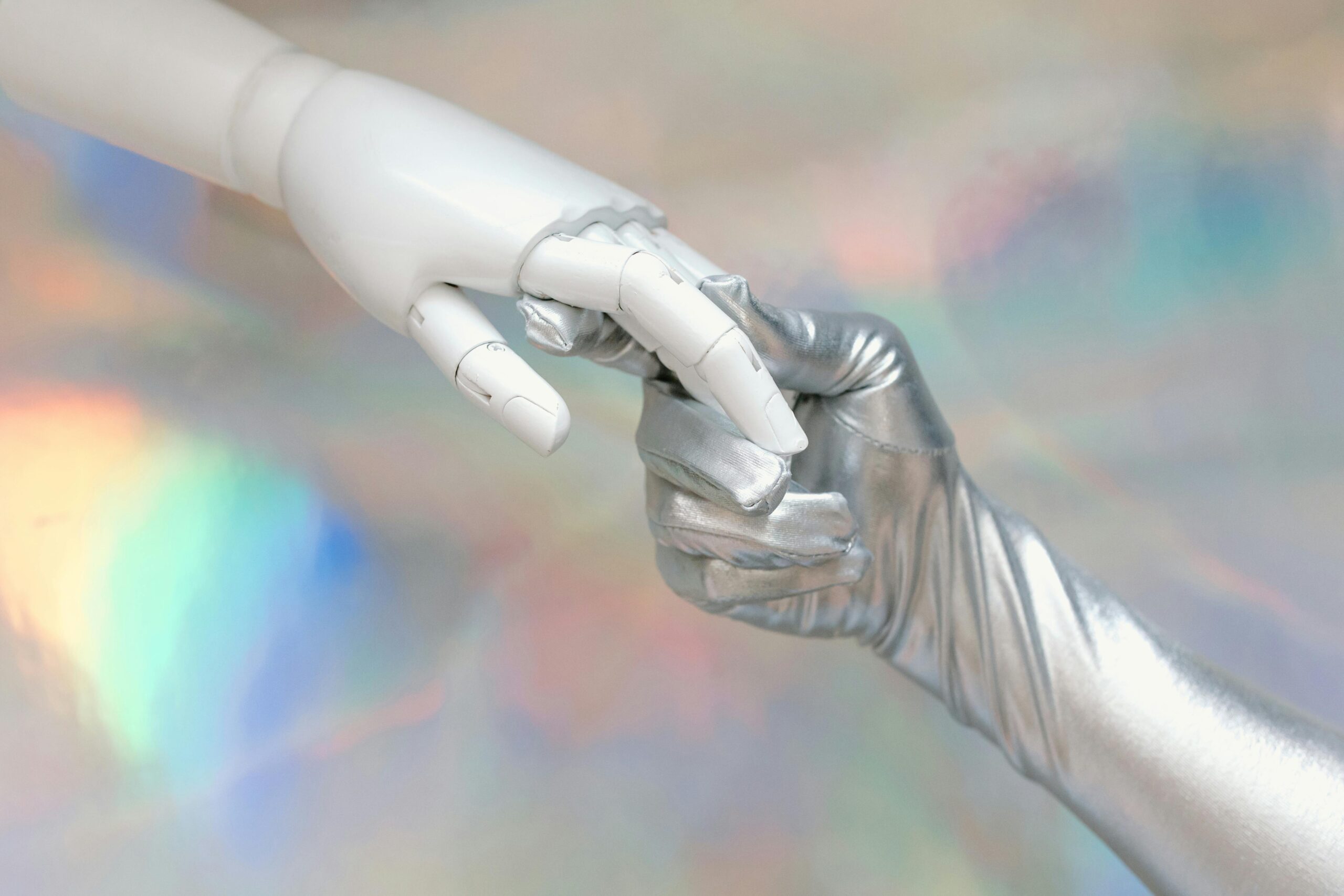
The future we’re building isn’t about humans versus machines or even humans replaced by machines. It’s about humans and machines together, each contributing unique strengths to challenges that require both computational power and human wisdom, analytical precision and ethical judgment, processing speed and creative insight. By intentionally designing and nurturing these symbiotic relationships, we truly can empower a future of innovation, collaboration, and limitless possibilities where technology serves humanity’s highest aspirations.